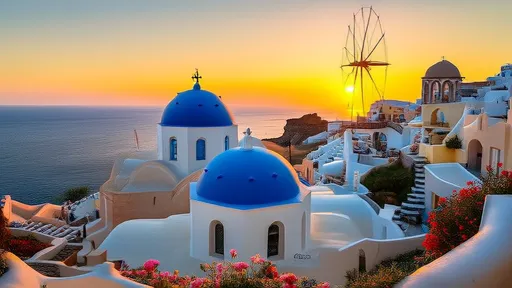
The iconic blue-domed churches of Santorini are among the most photographed landmarks in the world. Their striking whitewashed walls and cobalt domes, set against the deep blue of the Aegean Sea, create a visual spectacle that draws photographers and travelers alike. However, capturing the perfect shot requires more than just a good camera—it demands an understanding of the island’s unique light and how it interacts with these architectural gems throughout the day.
Morning Light: Soft and Serene
In the early hours, Santorini awakens with a gentle glow that bathes the island in soft, golden hues. The blue domes, particularly those in Oia and Fira, are illuminated with a delicate warmth that enhances their vibrant colors without the harshness of midday sun. This is the ideal time for photographers seeking a tranquil, almost ethereal quality in their images. The absence of crowds during these hours also allows for uninterrupted compositions, making it easier to frame the churches against the island’s dramatic cliffs and seascape.
The Challenge of Midday Sun
As the sun climbs higher, the light becomes intense and direct, casting sharp shadows that can overwhelm the subtlety of the blue domes. While the contrast between the white walls and blue domes remains striking, the harshness of the light often flattens the depth of the scene. For those determined to shoot during this time, using a polarizing filter can help mitigate glare and enhance the richness of the colors. However, many seasoned photographers prefer to use these hours for exploring the island’s interior or enjoying a leisurely lunch, waiting for the more forgiving light of late afternoon.
Golden Hour: A Photographer’s Dream
As the sun begins its descent, Santorini transforms into a paradise for light seekers. The golden hour—roughly an hour before sunset—paints the island in a radiant, amber glow. The blue domes take on an almost magical quality, their colors deepening as the sky shifts from blue to hues of pink and orange. This is the time when the island’s famous sunsets begin to unfold, and the churches become silhouetted against a fiery horizon. Positioning yourself near the cliffs of Oia or the quieter village of Imerovigli can yield breathtaking results, with the domes serving as focal points against the vast expanse of sea and sky.
Twilight and Beyond: The Blue Hour
After the sun has dipped below the horizon, the island enters the "blue hour," a brief period when the sky takes on a deep, cerulean tone. The domes, now subtly lit by ambient light, blend seamlessly into the twilight, creating a moody and atmospheric scene. This is a lesser-known but equally rewarding time to photograph the churches, especially for those looking to capture a more contemplative side of Santorini. The absence of harsh shadows allows for long exposures, bringing out the intricate details of the architecture while the first stars begin to appear in the sky.
Seasonal Considerations
The quality of light in Santorini varies significantly with the seasons. Summer brings long days and vibrant sunsets, but also larger crowds and a higher sun that can make midday photography challenging. Spring and autumn offer a softer, more diffused light, with the added bonus of fewer tourists. Winter, though less popular, provides a unique opportunity to see the domes dusted with occasional rain or even the rare snowfall, creating a completely different but equally captivating aesthetic.
Final Thoughts
Understanding the interplay of light and architecture is key to capturing the essence of Santorini’s blue-domed churches. Whether you’re an amateur with a smartphone or a professional with a DSLR, timing your visit to align with the island’s natural rhythms will elevate your photographs from simple snapshots to works of art. The magic of Santorini lies not just in its iconic landmarks, but in the ever-changing light that reveals them in infinite ways.

By /Jul 25, 2025
By /Jul 25, 2025
By /Jul 25, 2025
By /Jul 25, 2025
By /Jul 25, 2025
By /Jul 25, 2025
By /Jul 25, 2025
By /Jul 25, 2025
By /Jul 25, 2025
By /Jul 25, 2025

By /Jul 25, 2025
By /Jul 25, 2025

By /Jul 25, 2025

By /Jul 25, 2025

By /Jul 25, 2025
By /Jul 25, 2025

By /Jul 25, 2025

By /Jul 25, 2025

By /Jul 25, 2025
By /Jul 25, 2025
