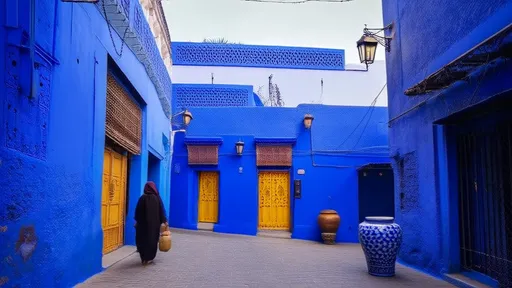
Nestled in the Rif Mountains of northern Morocco, Chefchaouen has long captivated travelers with its surreal cerulean alleyways. But in recent years, one particular intersection has achieved global fame – the so-called "internet-famous corner" where azure walls converge beneath cascading bougainvillea. This unassuming crossroads has become one of the most photographed locations in North Africa, though its exact origins remain shrouded in the same cobalt mystery that colors its walls.
Local lore suggests the blue-washing tradition dates back to the 15th century when Jewish refugees introduced the practice, possibly drawing from Kabbalistic associations between the color blue and divinity. Others claim it was a 20th-century innovation to repel mosquitoes or simply to keep homes cooler during scorching summers. Whatever its provenance, the effect is undeniably mesmerizing – particularly at this specific juncture where four steep staircases intersect, creating a geometric symphony of sapphire, turquoise, and powder blue planes.
The corner's viral fame can be traced to 2016 when travel influencers began geotagging their shots with #ChefchaouenBlue. What sets this spot apart from the town's other photogenic alleys is its perfect storm of visual elements: the way morning light bounces between walls at 10:32 AM creates an ethereal glow, while the contrast between indigo doorframes and terracotta pots filled with crimson geraniums makes colors appear almost hyperreal. By 2018, over 37% of Chefchaouen's Instagram posts featured this single intersection.
Residents have developed a complex relationship with their suddenly famous walls. Some homeowners near the corner now charge 20 dirhams (about $2) for photo permissions, while others have painted competing "copycat corners" in hopes of attracting attention. The municipal government has implemented timed visiting slots during peak seasons, as overcrowding led to disputes between photographers and locals trying to navigate the narrow passageways with grocery bags or livestock.
Beneath the surface of this photogenic phenomenon lies an unexpected ecological impact. The traditional lime-based blue paint, made from a mixture of crushed mineral pigments and local clay, has become increasingly difficult to source due to demand. Artisans report that three new synthetic pigment shops opened near the medina in 2022 alone, though purists argue these produce an "electric" blue that lacks the organic variation of traditional formulas. Conservationists have noted that the constant repainting (now required every 3-4 months instead of the former yearly cycle) may be altering the walls' porous structure.
For those seeking the corner's magic beyond the golden hour crowds, veteran photographers recommend two alternative approaches: arrive during the winter fog that transforms the blue walls into a dreamlike haze, or visit during Ramadan nights when the streets empty and the cobalt hues deepen under moonlight. Some creative souls have even begun capturing long-exposure shots of the corner during rare Moroccan snowfall, when white flakes cling to blue stair risers like something from a fairy tale.
As Chefchaouen grapples with its new identity as a social media pilgrimage site, the internet-famous corner stands as both a triumph of organic tourism and a cautionary tale about viral fame. The walls continue to whisper their centuries-old secrets, now punctuated by the shutter clicks of smartphones – a modern-day calligraphy written in light and pigment rather than ink.

By /Jul 25, 2025
By /Jul 25, 2025
By /Jul 25, 2025
By /Jul 25, 2025
By /Jul 25, 2025
By /Jul 25, 2025
By /Jul 25, 2025
By /Jul 25, 2025

By /Jul 25, 2025
By /Jul 25, 2025
By /Jul 25, 2025
By /Jul 25, 2025

By /Jul 25, 2025

By /Jul 25, 2025

By /Jul 25, 2025
By /Jul 25, 2025

By /Jul 25, 2025
By /Jul 25, 2025

By /Jul 25, 2025
By /Jul 25, 2025
